50-Amp RV Outlet Installation with Subpanel Wiring
A lot of RV owners don't realize how much goes into a proper home hookup. It's not just running a wire and slapping an outlet on the wall. To do it right, you need the correct amperage, a dedicated circuit, and - most importantly - verified voltage at the outlet before you ever plug in your rig.
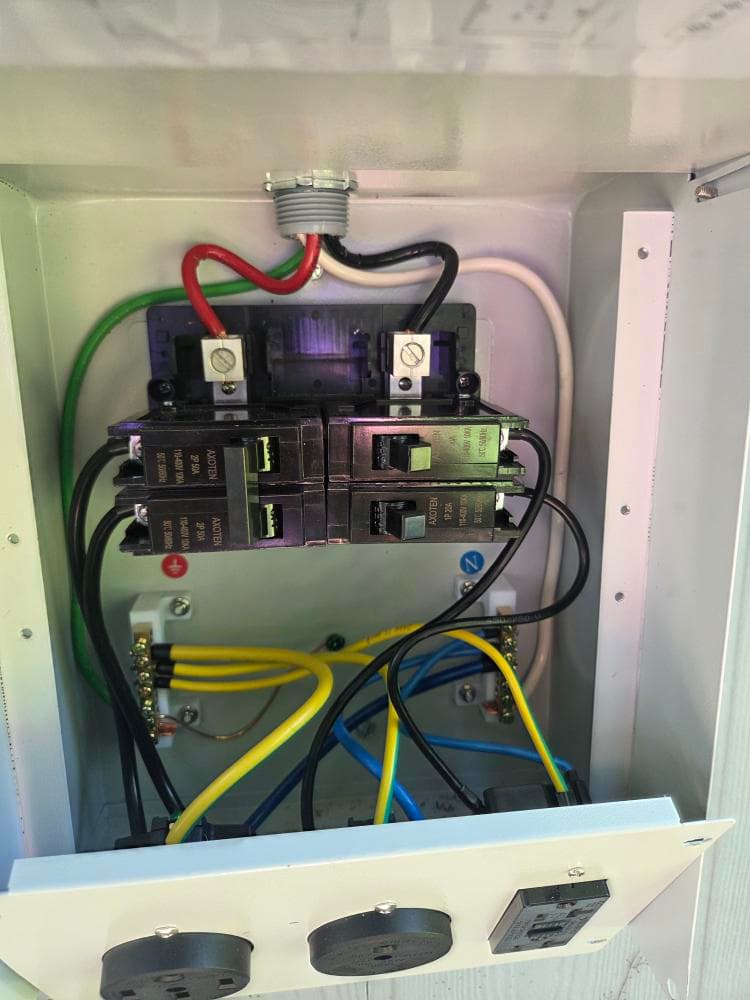
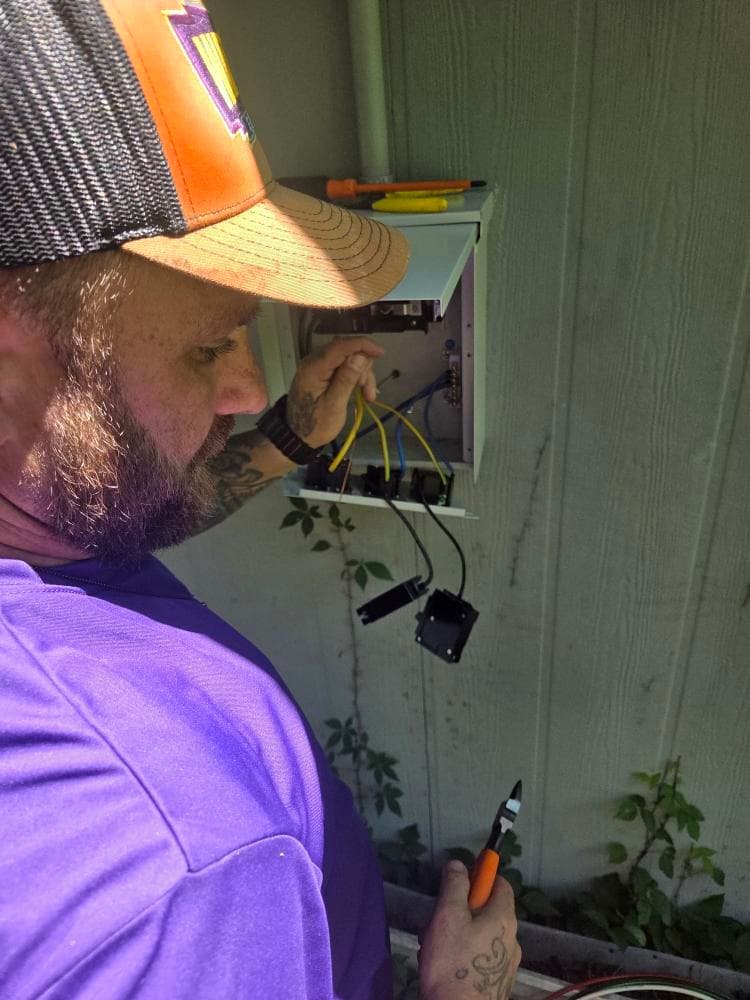
Here's what we were working with on this one: a full subpanel installation mounted on the exterior of the home, wired to support a 50-amp RV outlet. That's the kind of power draw that needs its own dedicated panel, proper breakers, and clean wiring from start to finish. We ran the conductors, landed everything in the subpanel, and made sure each connection was tight and correct.
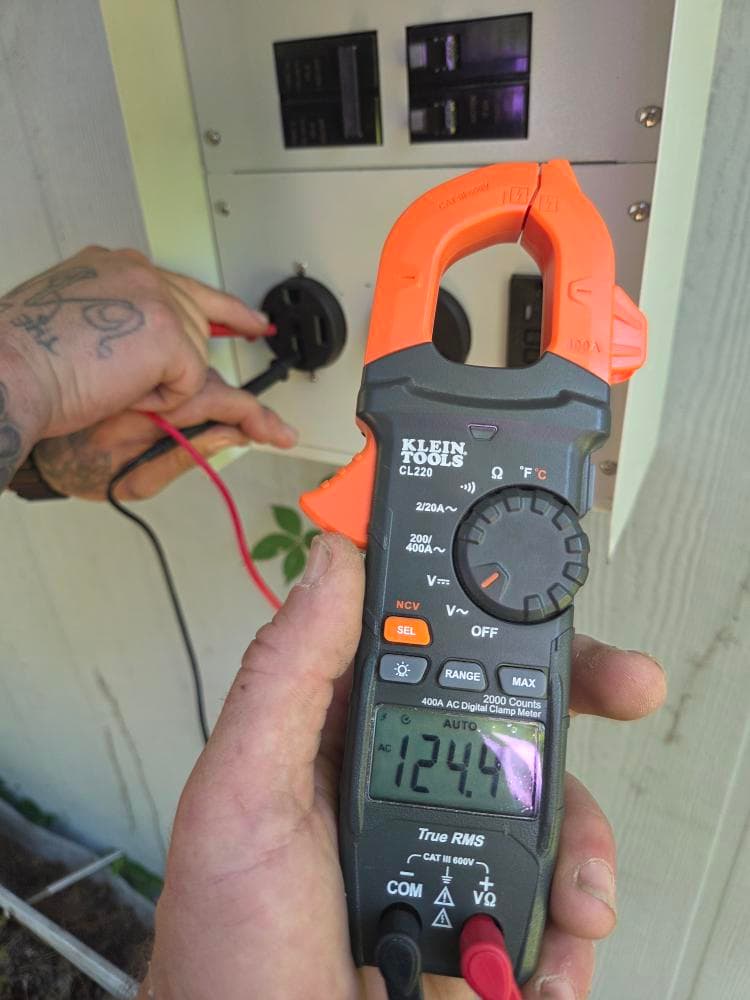
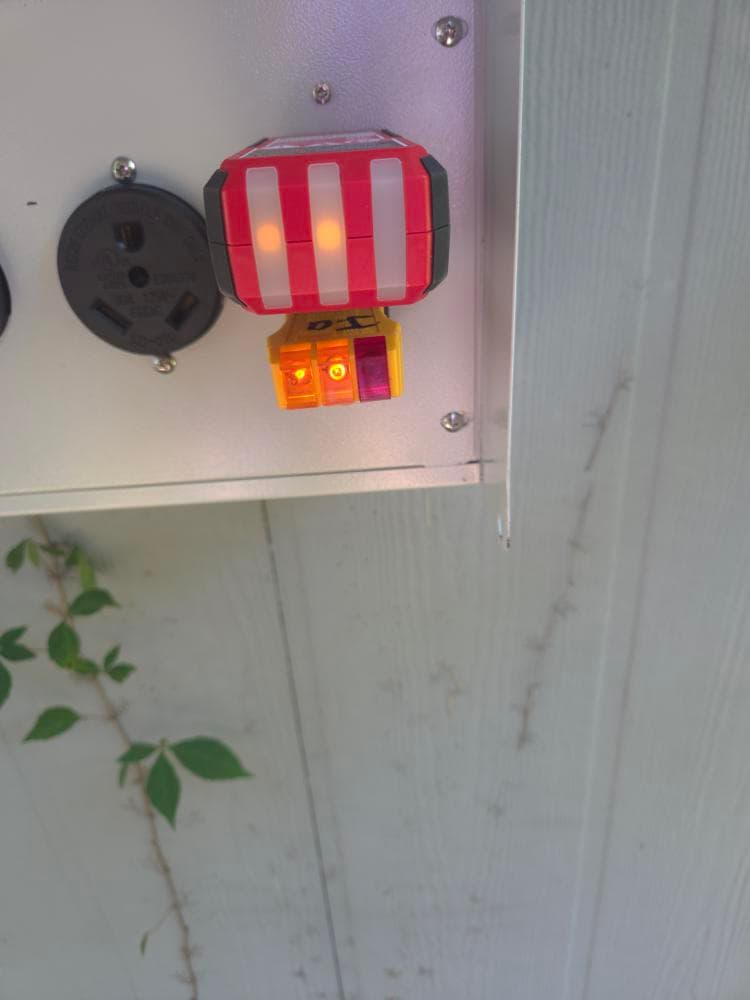
The part most people skip - and the part that matters most - is the testing. We used a Klein Tools clamp meter to verify voltage at the outlet itself, confirming a solid 124.4 volts AC at the receptacle. That number tells you the circuit is healthy, the wiring is correct, and the outlet is safe to use. No guessing, no hoping for the best.
Once everything checked out, the outlet was ready to go. Whether you're parking your RV at home between trips or setting up a more permanent spot in the driveway, having a dedicated 50-amp hookup means you're running your rig on clean, stable power - not an extension cord daisy chain that's going to cause problems down the road.
This is the kind of work that pays off every time you plug in. Subpanel wiring, outlet installation, and full voltage verification - done right the first time.